

Karina Anzar Ortiz is a doctoral student in Civil Engineering at the University of Memphis. She earned her B.S. degree in Environmental Engineering from the Western Institute of Technology and Higher Education (ITESO) in Mexico.
Karina’s areas of interest include environmental education, groundwater management, groundwater, and contamination modeling, identification of contamination sources, and characterization of contaminants. She likes working with Geographical Information Systems and is excited to be part of CAESER!

Muhammad Fahim Aslam is a doctoral student in Civil Engineering at Herff College of Engineering at the University of Memphis. He earned his M.Sc. degree in Water Resources Engineering and B.Sc. in Civil Engineering from the University of Engineering and Technology, Lahore, Pakistan. Muhammad has around ten years of work experience in the field of water resources, irrigation & flood management, hydraulics, hydrology, groundwater, and hydropower in the consultancy firm of National Engineering Services Pakistan. He has worked on numerous national-level projects with joint ventures of international firms.
His current research interests include the risk assessment of contamination in the Memphis aquifer, the determination of the value of water, and the effective usage of water to avoid losses.

Gordon Amankwaa is an environmental engineer who obtained his bachelor’s and master’s degrees in Geography and Environmental Science and Engineering from Kwame Nkrumah University of Science and Technology in Ghana and Jiangsu University in China. He acquired his training in health and safety management from IPED in the United Kingdom. He has undertaken numerous projects in Sub-Saharan Africa, China, and Germany. As a scholar, he has written and collaborated on numerous scientific publications in the fields of environmental monitoring, environmental behavior, environmental planning, and water resource management. He serves the role of peer reviewer for the Water Science and Technology Journal (IWA), the Environment, Development and Sustainability Journal (Springer), and the Journal of Water, Sanitation and Hygiene for Development (IWA). His current project with CAESER focuses on developing aquifer conservation and protection action strategies for implementation by MLGW (Memphis Light, Gas & Water), industries, citizens, and elected officials. View his publications at Google Scholar.

Shahrin Azmee is from Bangladesh and holds both undergraduate and master’s degrees in Geology and Mining. Before coming to the USA, she served for around 10 years as an Assistant Director (Geology) at the Geological Survey of Bangladesh (GSB). She is currently pursuing a Ph.D. in Earth Science at the University of Memphis. Her research interests include studying hydrology, hydrogeology, remote sensing, and mineralogy. Beyond academia, she enjoys traveling and exploring nature..

Kimberly Baldwin is a master’s student in Biological Sciences at the University of Memphis. She earned her B.S. in Biology in 2023 at the University of Memphis, with university honors, as well as through the Helen Hardin Honors College. She is a member of the Boardman and Brown labs in the Biological Sciences department. Her current research involves monitoring an intermittent stream system in West Tennessee for biofilm formation for further comparative analysis.
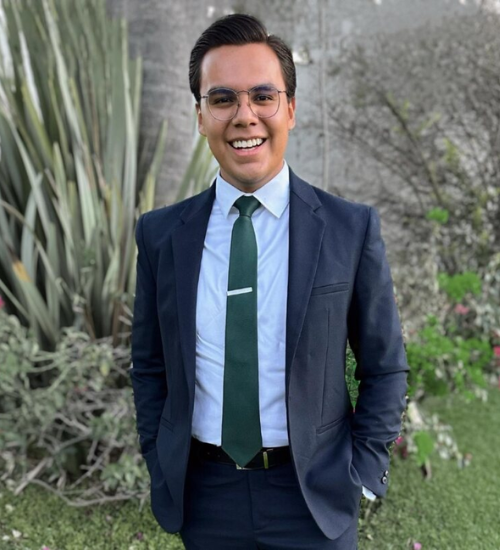
Emilio Castorena is a doctoral student in Civil Engineering at the University of Memphis. He received his B.S. in Environmental Engineering from the Western Institute of Technology and Higher Education (ITESO), Mexico, in 2023. As an undergraduate student, he participated as an assistant in sustainability projects located in Mexico’s coastal area.
Emilio’s research interests lie in ecological restoration and sustainability projects, groundwater management, and territorial analysis using Geographic Information Systems and flow modeling.


Chinyere Eunice Eme, a doctoral student in the Department of Civil Engineering, holds a Master’s in Geology from Kansas State University and a Bachelor of Technology degree in Geology/Mining (Science Laboratory Technology) from the esteemed Federal University of Technology Owerri. Throughout her academic journey, she has garnered numerous scholarships and accolades, including the EducationUSA Opportunity Funded Program Scholarship by the United States Mission in Nigeria, the National Association of Black Geoscientists Scholarship, and the William J. Barrett Fund for Excellence in Geology, among others. Eunice is very involved in her field and participates in a number of professional associations and organizations.
She is interested in groundwater modeling, aquifer management, sedimentology, and reservoir characterization. One notable contribution includes the innovative application of Tipping Point analysis to discern environmental shifts within sedimentary deposits, particularly in oil and gas plays. Currently, she is focused on delineating the geochemical properties of the delicate aquitard layer within the Memphis aquifer, aiming to enhance its hydraulic conductivity and kv/kh value within the CAESER groundwater model.

Mahmudul Hasan is a doctoral student in the Civil Engineering Department at the University of Memphis. His academic background includes a BS and MS degree in Geology from the University of Dhaka. During his master’s program, he focused on geological modeling, subsurface characterization, and fluid flow in the subsurface for his thesis.
His primary research interest lies in the numerical modeling of groundwater systems. His aim is to address critical questions related to groundwater resources, aquifer recharge and discharge, and the intricate interactions between surface water and groundwater. Through the development of a numerical model, his research will contribute to a better understanding of contaminant transport in the subsurface and facilitate the effective management of wellfields.

Abrar Hossain is a doctoral student in civil engineering at the University of Memphis and is affiliated with the Center for Applied Earth Science and Engineering Research (CAESER). He received a bachelor’s in science degree in Geology from the University of Dhaka, followed by a master’s in science degree with a specialization in Hydrogeology. Prior to joining CAESER, Abrar has been working as a faculty member at the Department of Disaster Science and Climate Resilience at the University of Dhaka since 2015. He also served as a Research Assistant/Associate in numerous collaborative international research projects.
His research interests span from field data-driven research to spatial analysis and modeling. Much of his research work has been on hazard-risk assessments for different water-related hazards as well as environmental assessments through integrating field data and spatial analysis. His research domains include groundwater contamination, hydrodynamics, groundwater flow and contamination modeling, groundwater-surface water interactions, and groundwater management. He is keen on understanding how anthropogenic activities can modify different earth processes.

Md Sahidul Islam is a dedicated doctoral student specializing in Geophysics at the University of Memphis. He began his academic journey by earning a bachelor’s degree in Geology from the University of Dhaka. Continuing his pursuit of knowledge, he achieved a master’s degree in Geophysics from the same esteemed institution.
In the fall of 2022, he joined the Center for Earthquake Research and Information (CERI) at the University of Memphis, marking the beginning of his professional journey in the field. Demonstrating his commitment to advancing geophysics research, Md Sahidul Islam expanded his horizons in the fall of 2023 by collaborating with the Center for Applied Earth Science and Engineering Research (CAESER).
His current research endeavors revolve around a significant project aimed at mapping breaches and paleochannels in the upper Claiborne confining unit within the urbanized portion of Shelby County, south of the Loosahatchie River. This ambitious project utilizes integrated geophysical methods, showcasing Md Sahidul Islam’s expertise and dedication to advancing our understanding of Earth’s geological processes.
As a passionate and driven individual, Md Sahidul Islam continues to contribute to the field of Geophysics, combining academic rigor with practical applications in his research.

Juan Pablo Jimenez Gonzalez is a doctoral student in Civil Engineering at the University of Memphis. He earned a B.S. in Environmental Engineering at Instituto Tecnológico y de Estudios Superiores de Occidente (ITESO) in Guadalajara City, Mexico, and was granted the Academic Excellence Scholarship. He presented his research projects at the Latin American Geospatial Forum 2018 and the 2nd Latin Congress of Research and Climate Change.
Juan Pablo has worked in the urban planning of Guadalajara city, specifically on water-related issues, climate change, and disaster risk management, and as an environmental consultant for renewable energy and mining projects to comply with Equator Principles. His research interests include groundwater modeling, groundwater management and governance, and disaster and risk management (considering climate change).

Kapil Karki is currently pursuing a Ph.D. in the Department of Earth Sciences with a primary emphasis on CAESER (Aquitard-2) Projects at the University of Memphis. He holds a Master of Science degree in Applied Geology from Tribhuvan University and a Bachelor of Science degree in Geology from Tri-Chandra Multiple Campus in Nepal. Kapil gained valuable work experience at Quartz Group, where he took on diverse responsibilities during his tenure. He is a member of the Nepal Geological Society (NGS). He served on the NGS-Public Relation Sub-Committee and is affiliated with professional organizations such as the International Association for Engineering Geology (IAEG) and the Nepalese Society of Engineering Geologists (NSEG).
His expertise spans groundwater exploration, aquifer characterization, geophysical surveys, hydrogeology, geotechnical investigations, sedimentary structures, and the study of depositional environments. He possesses technical proficiency in Seismic Refraction, Electrical Resistivity Imaging, Ground Penetration Radar, MASW/SASW/Downhole, and other geophysics topics relevant to infrastructure projects.
Kapil’s primary research interest lies in hydrogeology, borehole logging, geophysical investigation, and physical geology. His main research centers on aquitard breaches using geophysical methods and borehole data, emphasizing the hydrostratigraphy and geological structure of Shelby County. His goal is to systematically extract groundwater to contribute to sustainable drinking water solutions.

Karishma Khadka is a doctoral student in Civil Engineering at the University of Memphis. Groundwater recharge, water quality, and hydrogeochemistry are among her research interests.
She earned her M.S. degree in Geology from Tribhuvan University, Nepal, in 2017. She received a Student Research Grant under the Hariyo Ban Program, World Wide Fund (WWF) Nepal, for her master’s dissertation, which focused on hydrogeological assessment and geochemical analysis of springs. The research investigated the factors controlling the variation in physiochemical parameters of groundwater and identified groundwater chemistry controlling mechanisms.
Prior to coming to Memphis, she worked at the International Centre for Integrated Mountain Development (ICIMOD) based in Kathmandu, Nepal, where she had more than five years of experience working on research, implementation, and training on springshed management in Bangladesh, Bhutan, India, and Nepal. Her work mostly included comprehensive mapping of springs and springsheds, water quality research, an assessment of social and governance systems related to springs, and hydrogeological mapping for identification of recharge areas.

Brooke Lafferty is a doctoral student in Earth Science at the University of Memphis. She earned her B.S. in Geology at Middle Tennessee State University.
Her research interests include structural geology, sedimentation and stratigraphy, hydrogeology, and groundwater management. Brooke’s current research focuses on the hydraulic properties of faults and their effects on groundwater movement within aquifers.

Joseph Lane is a doctoral student in Earth Sciences at the University of Memphis. He earned his M.S. degree in Geology at Missouri State University and a B.S. in Geology and Geophysics at the University of Wisconsin Madison. His current research involves mapping the recharge zone to the Middle Claiborne aquifer.

Victoria Matthews is a master’s student in Geology with the University of Memphis. She earned her bachelor of arts, with university honors, in Earth Sciences and Anthropology from The University of Memphis in 2020. Her professional experience includes time working in the fields of environmental health and environmental consulting. She has extensive experience in groundwater quality monitoring and remediation efforts at a wide variety of sites including LUST sites, refineries, landfills, and general industry. Her professional experience also includes soil investigations, soil vapor investigations, and stormwater compliance. Her research interests include hydrology and sedimentology.
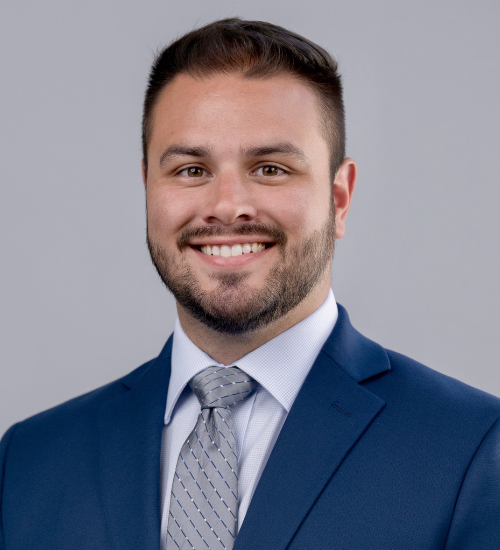
Kevin McKenzie is pursuing a master’s degree in Computer Engineering at the University of Memphis, where he also earned bachelor’s degrees in Computer Engineering, Electrical Engineering, and Education. He has over ten years of work experience in education and management, with research experience in hyperspectral image analysis, microcontroller and FPGA development, multiband camera characterization, and developing neural networks for audio classification and remote acoustic sensing. Currently, Kevin’s research focuses on microphone phased arrays, acoustic beamforming, signal processing, and neural networks within a multimodal sensing platform.

Melissa E. Medina-Sandoval is a doctoral student in Civil Engineering at The University of Memphis. She earned her B.S. in Environmental Engineering from the Western Institute of Technology and Higher Studies (ITESO), Guadalajara, Mexico. Melissa’s broad work experience ranges from Health, Safety, and Environment (HSE) practices to hydrological land use planning. She has also coordinated various projects involving the environmental characterization and short-term evolution of an Area of Interest (AOI) in a region of Zacatecas, Mexico.
Melissa’s research interests revolve around the utilization of Geographic Information Systems (GIS) and agricultural water and soil usage techniques to enhance land capability and ensure the sustainability of the processes.

Rodrigo Ruiz-Toscano is a doctoral student in Civil Engineering at The University of Memphis. He earned his B.S. in Environmental Engineering from the Western Institute of Technology and Higher Studies (ITESO), Guadalajara, Mexico. Rodrigo has work experience in environmental consultancy in Mexico and developing environmental baselines and characterization.
Rodrigo’s research interests are centered on utilizing Geographic Information Systems (GIS) and water data collection techniques to enhance water resources management and decision-making processes. Currently, he is applying these topics to identify and analyze potential sources of legacy contamination dating back to the mid-20th century that may affect the Memphis aquifer and its production wells.
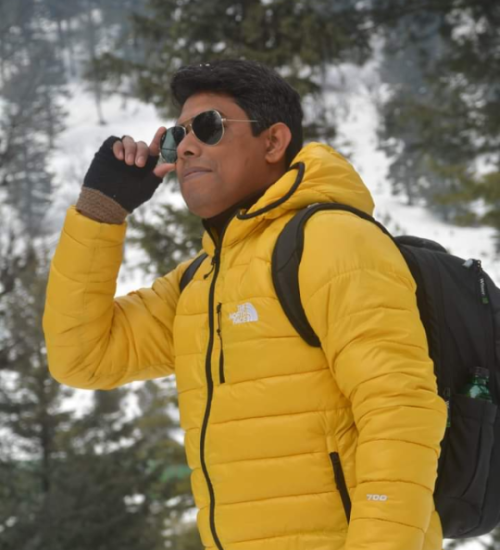
Md Abdullah Salman is a doctoral student in Earth Sciences at the University of Memphis. He earned his M.S. degree in geology, specializing in petroleum geology, and his B.S. degree in geology from the University of Dhaka, Bangladesh. Abdullah has work experience from KrisEnergy Limited and IHS Markit Global. He has also received graduate funding support from KrisEnergy Limited. He has teaching experience as an Assistant Professor at the University of Barishal, Bangladesh. In the meantime, he has work experience with various national projects and some international collaboration projects with the European Union.
Abdullah’s career and research interest focus on the application of novel and advanced geophysical techniques to hydrogeology and petroleum geology; examples to assess the hydrologic balance/water mass balance, groundwater modeling, groundwater-surface water interaction, as well as subsurface mapping of geological features and strata (drill cores, geophysical logging, and soil moisture profiling) with big data analysis, machine learning. He has applied these interests in the Sandy Creek Stream Restoration Project. Abdullah’s other domain interests include sedimentological analysis of the aquifer and the potential shallow reservoirs.

Raka Sunderland is an Earth Sciences doctoral student at the University of Memphis. She completed her Masters in Earth Sciences at the University of Memphis in May 2024. Her main interests are in the study of environmental tracers, geochemistry, water quality, and hydrogeology. Raka has a strong background in Chemistry and science education. She graduated cum laude with a B.S. in Chemistry from the University of Florida in 2000 and earned her M.S. in Science Education from the University of Pennsylvania in 2006. She taught Environmental Science and Chemistry to high school students for thirteen years in Philadelphia, PA, and Hartford, CT, where she developed the Chemistry curriculum for high school students at Sport and Medical Sciences Academy (SMSA) and taught the first University of Connecticut Chemistry course at SMSA.

Engr. Faraz Ul Haq is currently working as a Graduate Research Assistant at the University of Memphis, USA, pursuing a Ph.D. in Civil Engineering. Previously, he served as a Lecturer at the Centre of Excellence in Water Resources Engineering, University of Engineering & Technology (CEWRE-UET), Quaid-e-Azam College of Engineering and Technology (QCET), and the Pakistan Institute of Engineering and Technology (PIET), Pakistan. He also worked as a Research Associate at the University of Engineering & Technology (UET), Pakistan and as the Lab In-Charge for Soil and Water Quality Lab at CEWRE-UET, Pakistan.
With over eight years of teaching and research experience, Engr. Faraz holds a master’s degree in civil engineering (specializing in Water Resources and Irrigation Engineering) from UET Taxila, completed in 2018. His research contributions include 25 international journal publications with a cumulative impact factor of 70.672, 13 conference publications, and a book chapter on transboundary water issues published by Springer International. His work has garnered 230+ citations, with an h-index of 9.
Engr. Faraz has actively organized numerous national and international conferences, workshops, seminars, and lectures on water resources. His expertise spans GIS and remote sensing, groundwater, hydrogeology, and hydrology. View his publications at Google Scholar.

Luis Xavier Villaseñor-Coss-y-León is a doctoral student in Civil Engineering at the University of Memphis. He earned his B.S. in Environmental Engineering from the Western Institute of Technology and Higher Studies (ITESO), Guadalajara, México. His principal interests are oriented to the environmental modeling and the use of Geographic Information Systems (GIS) for a better decision making oriented do preserve the environmental systems and attend the societal challenges.
Luis Xavier has professional experience in the private sector, where he has worked on evaluating environmental quality in abiotic media and conducting geohydrological characterizations. Additionally, he has participated in research projects, such as surface water modeling to address flood issues, assessing landscape connectivity to identify priority areas for restoration, and characterizing accessibility to public spaces in urban environments.

Ivan Zamora Plaza is a doctoral student in Civil Engineering at the University of Memphis, specializing in environmental engineering with a focus on groundwater research. He earned his bachelor’s degree in environmental engineering from Instituto Tecnologico y de Estudios Superiores de Occidente (ITESO) in Mexico in 2021. His professional journey includes significant experience in environmental consultancy, particularly in the abiotic aspects of the mining industry, and work in carbon markets and emissions inventories. This background is complemented by their involvement in governance processes and liaising with various stakeholders, communities, and companies.
Ivan’s research at the University of Memphis is primarily centered on improving the estimation of young groundwater age-dating, incorporating groundwater travel time between the root zone and a breach. His work has a combined approach such as modeling and fieldwork topics. Ivan is deeply committed to leveraging work in groundwater systems to enhance the understanding and management of aquifers, with the ultimate goal of contributing to the well-being of the population. His dedication to this cause reflects a broader commitment to using scientific knowledge and engineering solutions to address pressing environmental and societal challenges.